Last updated
A Hak Pakai (right to use) is a land title that a foreigner with a KITAS or KITAP can hold in Bali. The initial term is up to 30 years and it can be extended to 80 years in total. It is registered at the land office (BPN), so it appears on a certificate in your name, which a lease never does.
Fees: a PPAT deed carries a capped fee set by regulation, with witnesses included, plus Rp 10,000 stamp duty per document. See notary fees in Bali.
Is Hak Pakai better than a lease?
A lease (Hak Sewa) is a private contract with the landowner. The term, the price and any extension are whatever the contract says, and there is no right to renew. A Hak Pakai is a registered title, so the right comes from the land office, not only from the owner's promise. The trade is that you need a residence permit to hold it. The comparison of every option is on buying property in Bali and leasehold vs freehold.
Who makes the Hak Pakai deed?
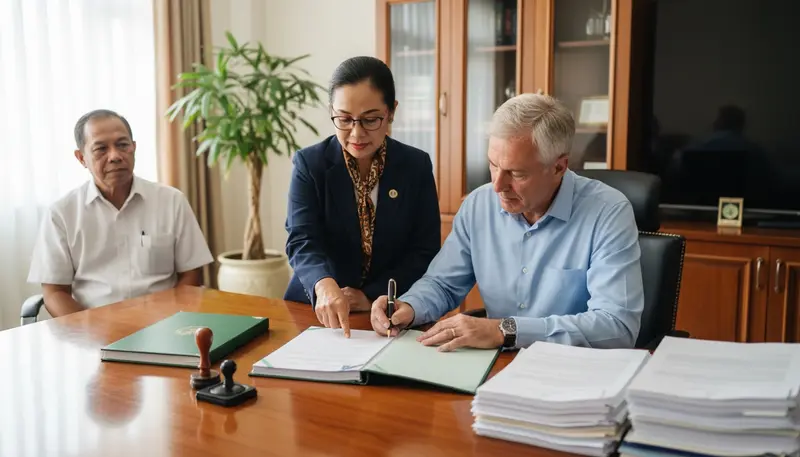
Only a PPAT can make the deed that grants a Hak Pakai or transfers it. A general notary cannot. The PPAT must be licensed for the regency where the land sits, and a deed drawn outside that appointment is rejected by the land office. Canggu, Seminyak, Kerobokan, Kuta, Jimbaran and Uluwatu fall under Badung. Ubud falls under Gianyar. The principals of this office hold both the notary and the PPAT appointment. See PPAT and sale deeds.
What are the steps?
- Check the land first. The certificate is verified at BPN, the seller is confirmed as the registered owner, and encumbrances, zoning and access are checked. See property due diligence.
- Agree the structure. Hak Pakai on land that is currently Hak Milik needs the right route, so it is settled before any deposit.
- Sign before the PPAT. The deed is drafted in Indonesian with an English version, because a foreigner signs.
- Pay the taxes. The buyer pays BPHTB transfer tax of 5% of the value above the regional threshold. The seller pays 2.5% final income tax.
- Register at BPN. Registration takes 2 to 8 weeks, then the new certificate is collected and handed over.
If you are abroad, the closing can run through a notarized and legalised or apostilled power of attorney. See power of attorney.
What about heirs and renewals?
A Hak Pakai can pass to an heir who also qualifies for a Hak Pakai, with BPN approval. Otherwise it may have to be sold. A will made in Bali for your Indonesian assets helps. See wills in Bali. Extensions are PPAT deeds too, so diary the dates.
Why not use a nominee?
An Indonesian friend holding freehold for you looks cheap and it is void. The land falls to the State and the money cannot be recovered. Courts have named notaries as defendants in these cases, so a reputable office will not draft one.